Which trading approach works better for beginners, a simple 9
Need articles like this for your video? They help promote it on YouTube and Google — order them in the Telegram bot @sat_sit_bot. It writes articles around your video, embeds the video and publishes them on popular niche websites (no ads). Try it free: 50 articles on us.
· based on the channel Scarface Trades
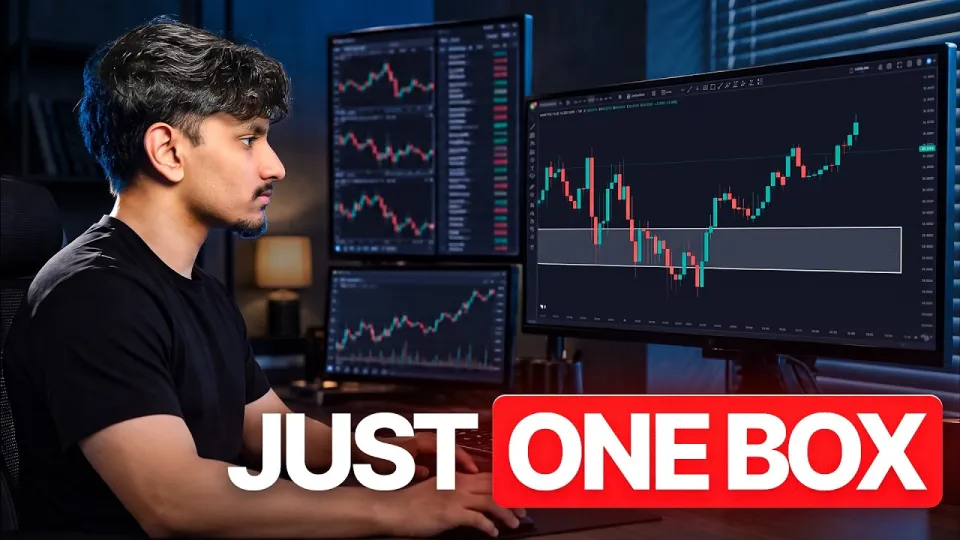
Trading becomes simpler when you stop stacking indicators and trade one repeatable setup: mark the 9:30 AM opening range, wait for a clean breakout, and enter only on the retest of the broken level with risk defined in advance. That is the core of the three-step model presented by the Scarface Trades channel in the video "Once You Master This Strategy, Trading Becomes Incredibly Simple", and the free Simple Trader Playbook course is where the author walks through the full framework.
Why most traders make trading harder than it needs to be
Overcomplicating the process is the most common reason traders stall, because every added indicator creates another opinion to argue with at the moment of execution. A chart loaded with moving averages, oscillators and trend tools produces contradictory signals: two indicators flash sell while a single trend line says the opposite, and the trader either freezes or takes the wrong side. The Scarface Trades video opens on exactly this problem, framing the fix as subtraction rather than addition.
A one-minute chart with a clear level, a defined trigger and a fixed stop is easier to execute under pressure than a five-condition checklist. Fewer inputs mean fewer conflicting votes, and a decision that can be repeated the same way every session.
The three-step trading model behind the 9:30 AM setup
The model is a sequence, and each step filters the next: structure first, trigger second, entry last. Skipping a step turns a planned trade into a reaction.
- Set up the trade. Mark the opening range formed right after the 9:30 AM New York open, along with the prior day's high and low. These levels define where the session's liquidity sits and which side of the market is worth watching.
- Apply the strategy filter. Wait for price to break out of that opening range with momentum rather than chop. The breakout itself is not the trade; it is the signal that a direction has been chosen.
- Use the entry model. Enter on the retest of the broken level instead of chasing the breakout candle. The retest gives a defined invalidation point just beyond the level, which is what makes the risk measurable.
The video's example section is built around improving win rate through this retest logic, since entering after the level is reclaimed filters out the fake breakouts that stop out breakout chasers.
What the entry actually looks like on a one-minute chart
Entry precision on the retest is the part beginners ask about most, and the answer is mechanical rather than discretionary. After the breakout, price often returns to the level it just cleared; the entry is taken when that retest holds, with the stop placed on the other side of the level and the target set at the next reference point such as the prior day's high or low.
Three practical rules keep this consistent:
- Trade only in the direction of the opening-range breakout; do not fade it on the same setup.
- Skip the trade if price is sitting in the middle of the prior day's range with no clear level nearby.
- Size the position from the stop distance, not from a desired dollar profit, so a wide stop does not turn into an oversized loss.
On the one-minute timeframe the stop distance is small, which is why position size matters: the same dollar risk requires a much larger share or contract count than on a five-minute chart. Traders who find that uncomfortable can scale the model up to a higher timeframe, where the structure is identical but the position size is smaller.
Common objections to this trading approach
Skepticism about the 9:30 AM model is fair and usually falls into four buckets: timeframe, hindsight, position size and instrument choice. Each has a concrete answer.
The one-minute chart feels too fast. It is fast, and that is the point: the stop is tight and the trade resolves quickly. Traders who cannot watch the open live can apply the same opening-range logic on five- or fifteen-minute candles.
The setups look obvious after the fact. Hindsight is the biggest trap in any price action breakdown. The only honest test is replaying the setup bar by bar in a simulator across dozens of sessions and recording win rate, average risk-to-reward and drawdown before risking real money.
The position size seems huge. It is large in share count because the stop is small in points. That is a feature of tight-stop scalping, not a flaw, but it demands strict risk per trade.
Does it work outside US stocks? The structure is instrument-agnostic: opening ranges and prior-day levels exist in forex pairs, futures and crypto. The 9:30 AM reference simply shifts to the relevant session open for that market.
How to test this trading strategy before risking capital
Backtesting is the step that converts a video idea into a personal edge, and it should take priority over live execution. Replay twenty to thirty sessions of the same instrument, mark the opening range, log every valid breakout and retest, and record the outcome of each trade as a multiple of risk. If the sample shows a positive expectancy after realistic spreads and commissions, move to a small live size; if it does not, the model is not yet yours to trade.
Keep the sample honest by including the boring sessions where nothing triggers, since a strategy's real profile includes the days it keeps you flat. Forward-testing on a simulator for a few weeks after that gives a cleaner read on execution discipline than any backtest can.
Useful links
- Simple Trader Playbook course (free)
- The Accelerator — private Discord community and live trading
- Scarface Trades on Instagram
- Scarface Trades on X
Final thoughts on keeping trading simple
The value of this model is not that it predicts the market; it is that it removes decisions. One session anchor, one breakout, one retest entry and one fixed risk per trade leave very little room for improvisation, which is exactly where most losses originate. Traders who master the sequence tend to describe trading as simple afterward, not because the market got easier but because the process stopped changing. The Scarface Trades channel is the source of this breakdown, and its free playbook is a reasonable next step for anyone who wants the full walkthrough. Start with the Simple Trader Playbook course, then backtest before you trade.
Key takeaways
- The strategy is built around the 9:30 AM New York open, when the first candles set the session's opening range.
- The 3-step model: mark the opening range, wait for a breakout, then enter on the retest of the broken level.
- Entries are taken on the 1-minute chart, which is the main objection raised by viewers.
- Most losing traders fail on patience and process, not on the number of indicators they run.
- The setup must be backtested in a simulator before it is trusted with real capital.
Source: Once You Master This Strategy, Trading Becomes Incredibly Simple · Markdown version
Questions & answers
What timeframe should I use for this trading strategy?
The model is demonstrated on the one-minute chart, where the opening-range breakout and retest happen quickly and the stop stays tight. Traders who find one-minute candles too fast can apply the same structure on five- or fifteen-minute charts, accepting a wider stop and a smaller position size.
How do I know where exactly to enter on the retest?
The entry comes when price returns to the level it just broke and holds there, not on the breakout candle itself. Place the stop on the other side of that level and target the next reference point, such as the prior day's high or low, so risk and reward are defined before the order goes in.
Is a large position size required for this setup to be profitable?
Position size is large in share or contract count because the stop distance on a one-minute chart is small. That is standard for tight-stop scalping; the important number is the fixed dollar risk per trade, which should stay constant regardless of how wide the stop is.
Does the 9:30 AM opening-range approach work on forex and futures?
The underlying logic of opening ranges and prior-day levels applies to any liquid market, including futures, forex pairs and crypto. The only adjustment is the reference time: use the relevant session open for that instrument instead of the New York equity open.